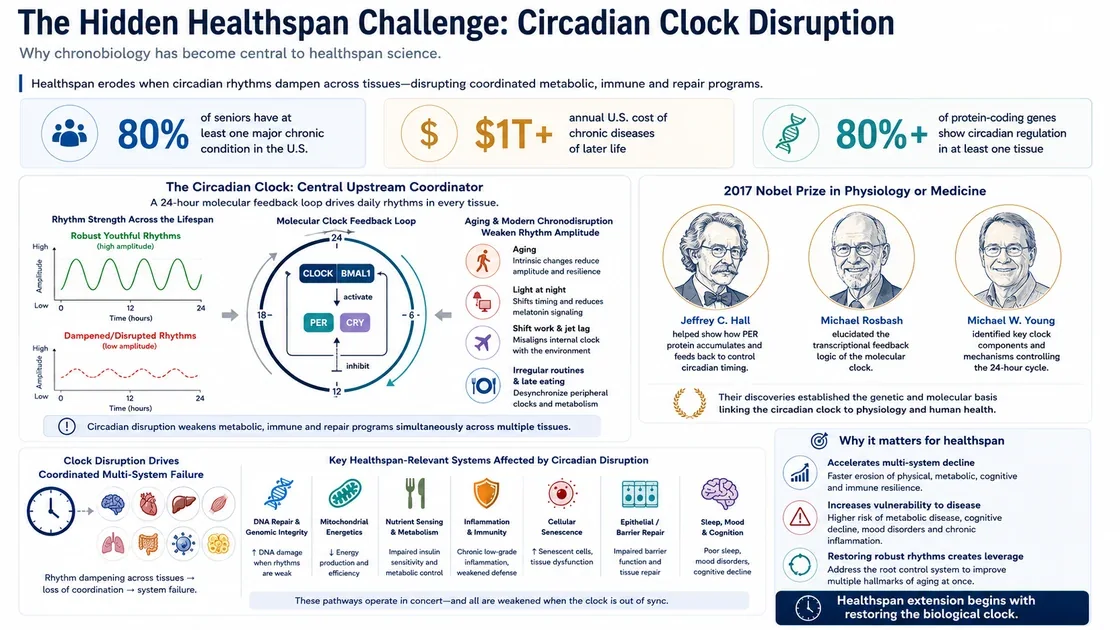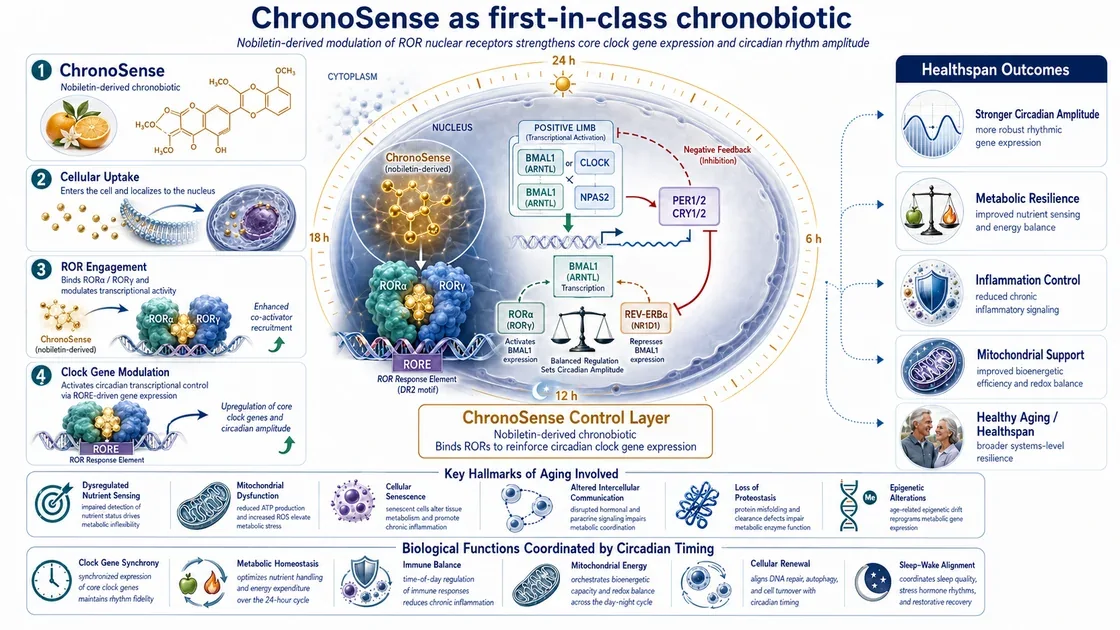
“Fixing the clock” can mean several different things. A rhythm may occur too early or too late. It may become weaker. Different tissues may lose synchrony. Or an intervention may work differently depending on when it is delivered.
Phase: when a rhythm occurs
Phase describes timing relative to a reference. Light, sleep schedules, meals and other cues can shift phase. A phase claim requires a marker capable of identifying when the rhythm peaks or crosses a defined point.
Amplitude: how strongly it oscillates
Amplitude describes the peak-to-trough strength of a recurring signal. Aging and disruption may be associated with dampened rhythms in some systems. DeepSense is investigating whether ChronoSense can enhance amplitude, not simply shift phase.
Why time-standardization is difficult
Clock-gene expression changes dramatically across the day. Comparing samples taken at different biological times can create an apparent treatment effect where none exists—or hide a real one. Sleep, meals, activity, light, metabolism and medication can add further variation.
A response score needs multiple layers
A robust amplitude-focused score may combine repeated molecular samples, wearable-derived rhythms, behavioral timing and physiological proxies. Each component should be normalized to time and evaluated for reliability, missingness and confounding.
Amplitude cannot be inferred from one time point. A chronobiotic claim should be matched to a rhythm-measurement design.
What members should take from the thesis
The platform has a specific scientific direction, but the membership site does not claim that amplitude enhancement has been clinically established for every application. Evidence labels show where the work stands.
Context and source notes
Mechanistic and measurement article. Review the corporate chronobiotics page and the membership evidence standards. No individual treatment recommendation is provided.